The Evolution of Lottery Data Storage Methods from Manual Ledgers to Modern Databases in UK and EuroMillions Contexts
Harper Koch · Oct 12, 2026
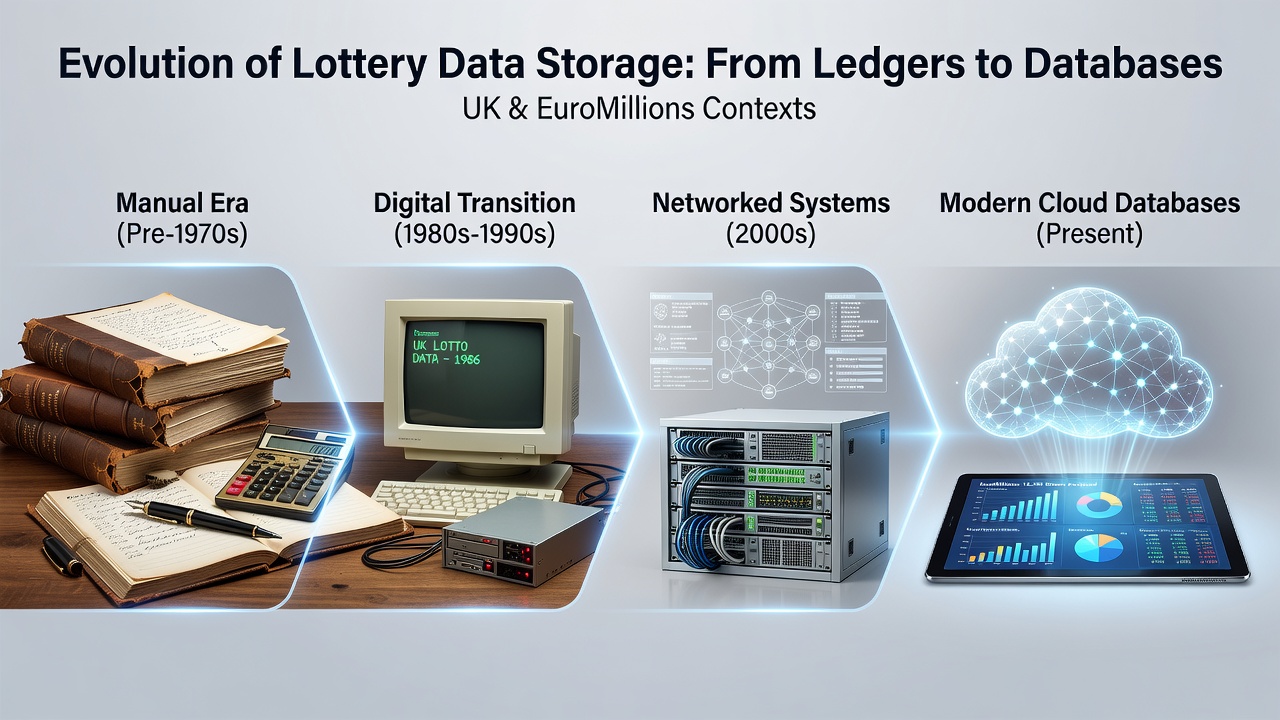
The Evolution of Lottery Data Storage Methods from Manual Ledgers to Modern Databases in UK and EuroMillions Contexts
Early lottery operations in the United Kingdom relied on manual ledgers where clerks recorded ticket sales, draw results, and prize allocations by hand, and these paper-based systems required careful cross-checking to prevent errors during each weekly cycle. EuroMillions draws began in 2004 and followed similar initial practices across participating European countries before centralized digital systems took hold, while operators maintained separate national records that later merged into shared platforms for cross-border prize management.
Transition from Paper Records to Early Digital Systems
Operators introduced punch card technology in the 1970s and 1980s to handle growing ticket volumes, and this method allowed mechanical sorting machines to process sales data faster than handwritten entries while still depending on physical media for backup storage. The UK National Lottery launch in 1994 accelerated the shift, because organizers needed reliable tracking for millions of weekly transactions, and they adopted magnetic tape systems that stored draw histories adn winner details in sequential formats accessible only through specialized equipment.
Adoption of Relational Databases in the 1990s and 2000s
Relational database management systems replaced tape storage during the late 1990s, and these platforms organized information into structured tables that supported rapid queries for number frequencies, jackpot rollovers, and regional sales patterns across UK Lotto and EuroMillions formats. Multiple operators integrated SQL-based solutions that linked ticket purchase records with draw outcomes, which reduced retrieval times from hours to seconds and enabled real-time updates during live broadcasts, whereas earlier methods required overnight batch processing to reconcile all entries.
Key Milestones in EuroMillions Data Handling
EuroMillions expanded its database infrastructure in 2010 to accommodate additional participating nations, and this upgrade introduced distributed servers that synchronized results across borders while maintaining compliance with varying national reporting standards. By October 2026, ongoing refinements had incorporated cloud-based replication for redundancy, which ensured that historical archives remained available even during regional outages, and analysts could access decades of archived distributions without physical media handling.
Security and Compliance Enhancements Over Time
Modern databases incorporate encryption protocols and audit trails that log every access attempt, and these features replaced the physical locks and signature logs used with paper ledgers in previous decades. Industry reports from the World Lottery Association highlight how centralized systems now support automated validation of winning combinations against ticket databases, which minimizes discrepancies that once required manual review of thousands of entries.
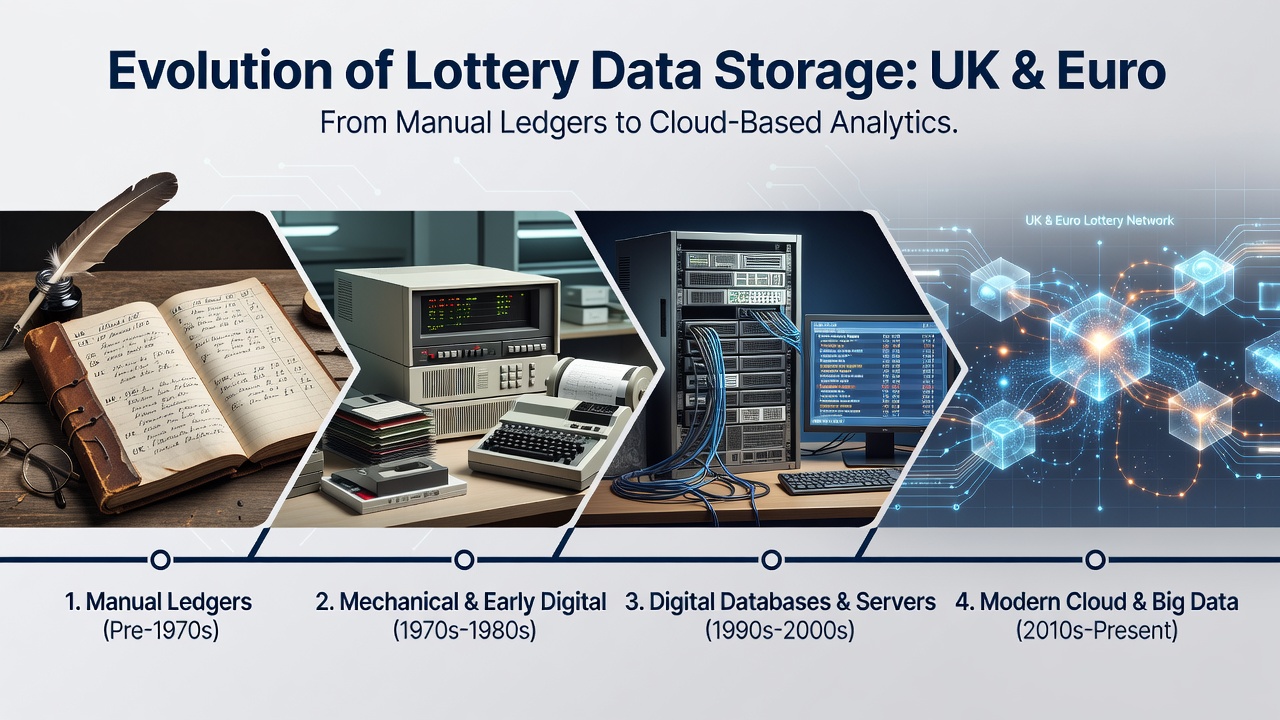
Researchers at academic institutions have examined how data integrity checks evolved alongside regulatory requirements, and their findings show that electronic signatures and timestamped transactions replaced handwritten verifications by the early 2000s in major European lotteries.
Current Practices and Future Directions
Contemporary platforms employ NoSQL elements alongside traditional relational structures to manage unstructured data such as player behavior logs, and these hybrid approaches allow operators to scale storage capacity without proportional increases in maintenance overhead. Data from sources like the European Lotteries association indicates that backup procedures now include geographically dispersed replicas updated in near real time, which protects against data loss scenarios that manual systems could not mitigate effectively.
Conclusion
The progression from manual ledgers to integrated databases reflects broader technological advances that have transformed how UK Lotto and EuroMillions operators manage vast quantities of transactional information, and these changes continue to support accurate prize distribution and historical analysis as of late 2026. Observers note that each stage built upon previous capabilities, creating layered systems that preserve legacy records while enabling new analytical functions.